Atnaujinkite slapukų nuostatas

El. knyga: Dialogue in the Language Classroom: Theory and Practice from a Classroom Discourse Analysis

(Faculty of Global Communications, Doshisha University)

DRM apribojimai

  • Kopijuoti:

    neleidžiama

  • Spausdinti:

    neleidžiama

  • El. knygos naudojimas:

    Skaitmeninių teisių valdymas (DRM)
    Leidykla pateikė šią knygą šifruota forma, o tai reiškia, kad norint ją atrakinti ir perskaityti reikia įdiegti nemokamą programinę įrangą. Norint skaityti šią el. knygą, turite susikurti Adobe ID . Daugiau informacijos  čia. El. knygą galima atsisiųsti į 6 įrenginius (vienas vartotojas su tuo pačiu Adobe ID).

    Reikalinga programinė įranga
    Norint skaityti šią el. knygą mobiliajame įrenginyje (telefone ar planšetiniame kompiuteryje), turite įdiegti šią nemokamą programėlę: PocketBook Reader (iOS / Android)

    Norint skaityti šią el. knygą asmeniniame arba „Mac“ kompiuteryje, Jums reikalinga  Adobe Digital Editions “ (tai nemokama programa, specialiai sukurta el. knygoms. Tai nėra tas pats, kas „Adobe Reader“, kurią tikriausiai jau turite savo kompiuteryje.)

    Negalite skaityti šios el. knygos naudodami „Amazon Kindle“.
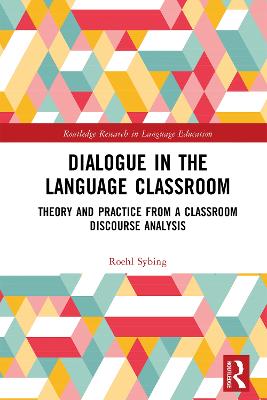
By providing a contemporary understanding of theories on classroom dialogue through a sociocultural lens, Sybing offers innovative ways to observe and foster more engaged interaction between teacher and student, particularly in language learning contexts.

How teachers interact with students has a profound impact on learning outcomes and learner development yet remains a topic that requires more attention in language education. As research and practice in all education domains shift toward more dialogic approaches to the co-construction of knowledge, language education can also benefit from a more comprehensive approach to classroom dialogue that is relevant to interaction with language learners. This book provides a foundational understanding of theories of classroom dialogue relevant to language classroom contexts, which will guide an analysis of teacher–student interactions taken from observations of a language classroom in order to propose a framework for language classroom dialogue for theory and practice.

Researchers and practitioners in language education will benefit from a comprehensive overview of discussion of and contemporary research in classroom interaction, sociocultural theory, and intercultural communication. This book offers useful guidance to scholars where such discussions are especially useful for addressing issues of native-speakerism and language ownership.


By providing a contemporary understanding of theories on classroom dialogue through a sociocultural lens, Sybing offers innovative ways to observe and foster more engaged interaction between teacher and student particularly in language learning contexts.

1. Understanding Language Classroom Dialogue 2. Theories of Classroom
Dialogue
3. The Language Learning Context
4. Incorporating the Other
5.
Dialogue and Silence
6. Forms of Expertise and Power
7. Products of
Co-Construction
8. Expansions to Dialogic Theory
9. A Framework for Language
Classroom Dialogue
10. Revisiting Existing Language Education Research
11.
Future research in language classroom dialogue
Roehl Sybing is an assistant professor in the Faculty of Global Communications at Doshisha University in Kyoto, Japan. He has a PhD in Education from the University of Massachusetts Amherst, USA.