Atnaujinkite slapukų nuostatas

El. knyga: Monologic Imagination

Edited by (Associate Professor and ARC Future Fellow in the Anthropology Program, Monash School of Social Sciences, Monash University), Edited by (Australian Research Council Future Fellow in Anthropology, The Australian National University in Canberra)

DRM apribojimai

  • Kopijuoti:

    neleidžiama

  • Spausdinti:

    neleidžiama

  • El. knygos naudojimas:

    Skaitmeninių teisių valdymas (DRM)
    Leidykla pateikė šią knygą šifruota forma, o tai reiškia, kad norint ją atrakinti ir perskaityti reikia įdiegti nemokamą programinę įrangą. Norint skaityti šią el. knygą, turite susikurti Adobe ID . Daugiau informacijos  čia. El. knygą galima atsisiųsti į 6 įrenginius (vienas vartotojas su tuo pačiu Adobe ID).

    Reikalinga programinė įranga
    Norint skaityti šią el. knygą mobiliajame įrenginyje (telefone ar planšetiniame kompiuteryje), turite įdiegti šią nemokamą programėlę: PocketBook Reader (iOS / Android)

    Norint skaityti šią el. knygą asmeniniame arba „Mac“ kompiuteryje, Jums reikalinga  Adobe Digital Editions “ (tai nemokama programa, specialiai sukurta el. knygoms. Tai nėra tas pats, kas „Adobe Reader“, kurią tikriausiai jau turite savo kompiuteryje.)

    Negalite skaityti šios el. knygos naudodami „Amazon Kindle“.

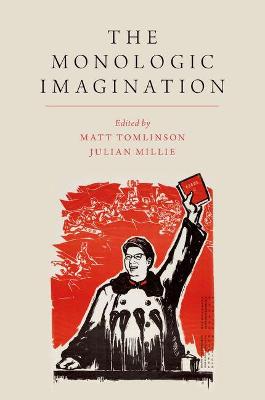
The pioneering and hugely influential work of Mikhail Bakhtin has led scholars in recent decades to see all discourse and social life as inherently "dialogical." No speaker speaks alone, because our words are always partly shaped by our interactions with others, past and future. Moreover, we never fashion ourselves entirely by ourselves, but always do so in concert with others. Bakhtin thus decisively reshaped modern understandings of language and subjectivity. And yet, the contributors to this volume argue that something is potentially overlooked with too close a focus on dialogism: many speakers, especially in charged political and religious contexts, work energetically at crafting monologues, single-voiced statements to which the only expected response is agreement or faithful replication. Drawing on ethnographic case studies from the United States, Iran, Cuba, Indonesia, Algeria, and Papua New Guinea, the authors argue that a focus on "the monologic imagination" gives us new insights into languages' political design and religious force, and deepens our understandings of the necessary interplay between monological and dialogical tendencies.
Acknowledgments vii
Contributors ix
Introduction: Imagining the Monologic 1(18)
Matt Tomlinson
1 Cultural Replication: The Source of Monological and Dialogical Models of Culture
19(28)
Greg Urban
2 Dialogic Prophecies and Monologic Vision
47(12)
Jon Bialecki
3 Monologue and Dialogism in Highland New Guinea Verbal Art
59(30)
Alan Rumsey
Discussion: Is It Monologic? Is It Dialogic? What Difference Does It Make?
81(8)
Don Kulick
4 "With Unity We Will Be Victorious!": A Monologic Poetics of Political "Conscientization" within the Cuban Revolution
89(32)
Kristina Wirtz
5 From Neighborhood Talk to Talking for the Neighborhood
121(22)
Zane Goebel
6 Monologue and Authority in Iran: Ethnic and Religious Heteroglossia in the Islamic Republic
143(28)
James Barry
Discussion: Diving into the Gap: "Words," "Voices," and the Ethnographic Implications of Linguistic Disjuncture
159(12)
Krista E. Van Vleet
7 Acting with One Voice: Producing Unanimism in Algerian Reformist Theater
171(32)
Jane E. Goodman
8 Creedal Monologism and Theological Articulation in the Mennonite Central Committee
203(28)
Philip Fountain
9 The Public Metaculture of Islamic Preaching
231(28)
Julian Millie
Discussion: The Monologic Imagination of Social Groups
251(8)
Courtney Handman
Conclusion: Religious and Political Terrain of the Monologic Imagination 259(10)
Matt Tomlinson
Julian Millie
Index 269
Matt Tomlinson is an Associate Professor of Anthropology at the Australian National University. Since the mid-1990s, he has conducted research on culture, language, and ritual in Pacific Islands societies. He is the coeditor of several volumes and the author of two books, In God's Image: The Metaculture of Fijian Christianity (2009) and Ritual Textuality: Pattern and Motion in Performance (Oxford, 2014).

Julian Millie is Asssociate Professor and Australian Research Council Future Fellow in Anthropology at Monash University. He has completed research on Islamic practice in Indonesia and on the genres of Islamic culture in the region. He has published two books: Bidasari: Jewel of Malay Muslim Culture (2004) and Splashed by the Saint: Ritual Reading and Islamic Sanctity in West Java (2009).